Professional Enclosure Manufacturer | Custom Solutions
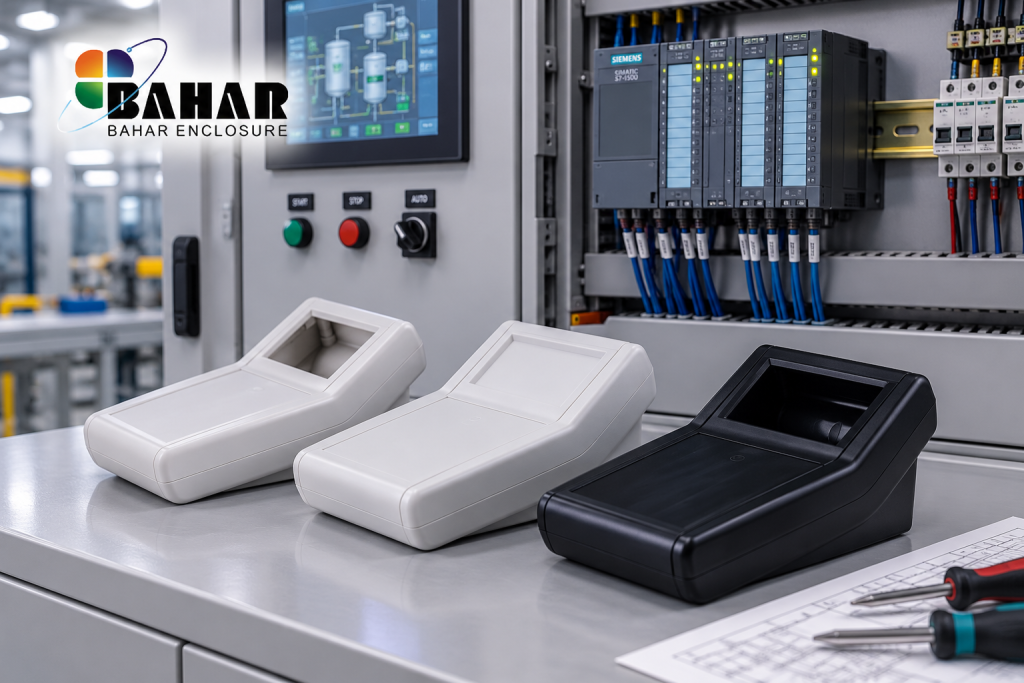
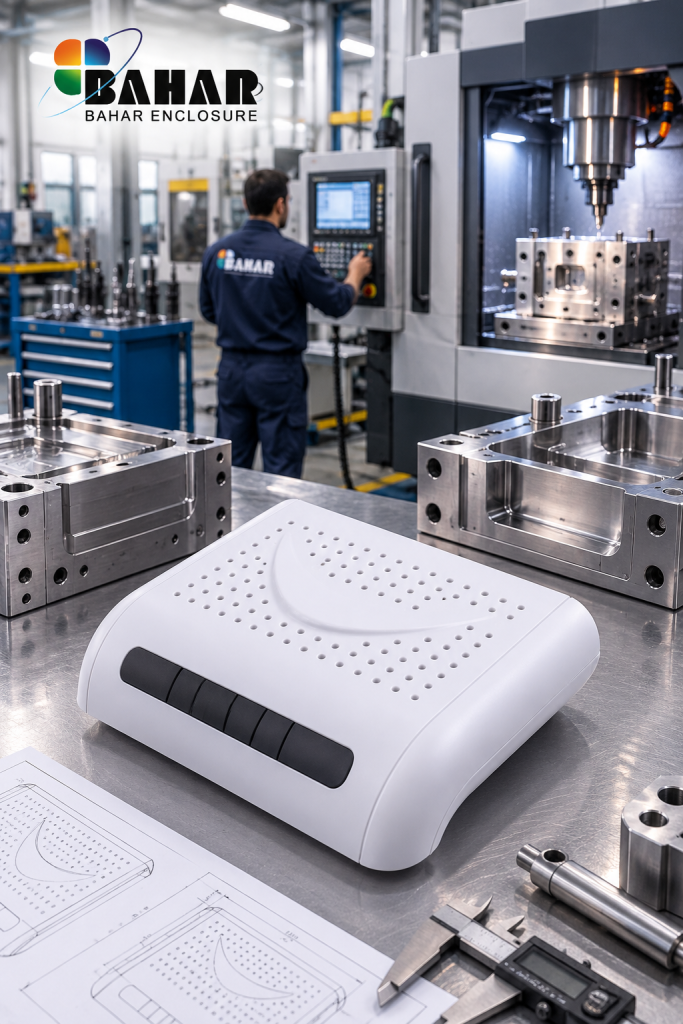
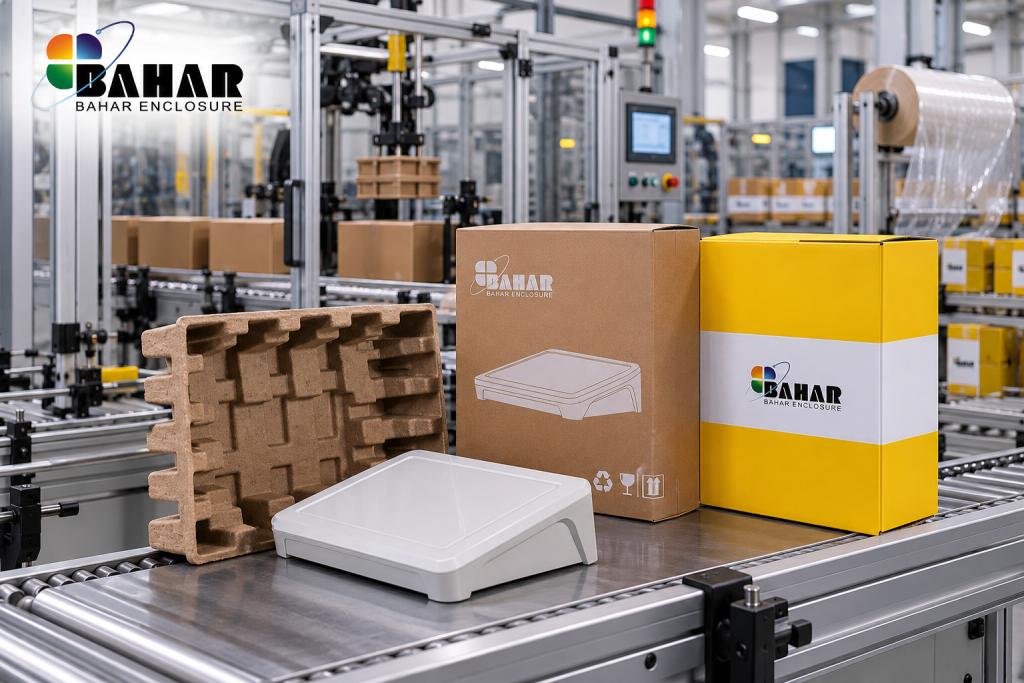
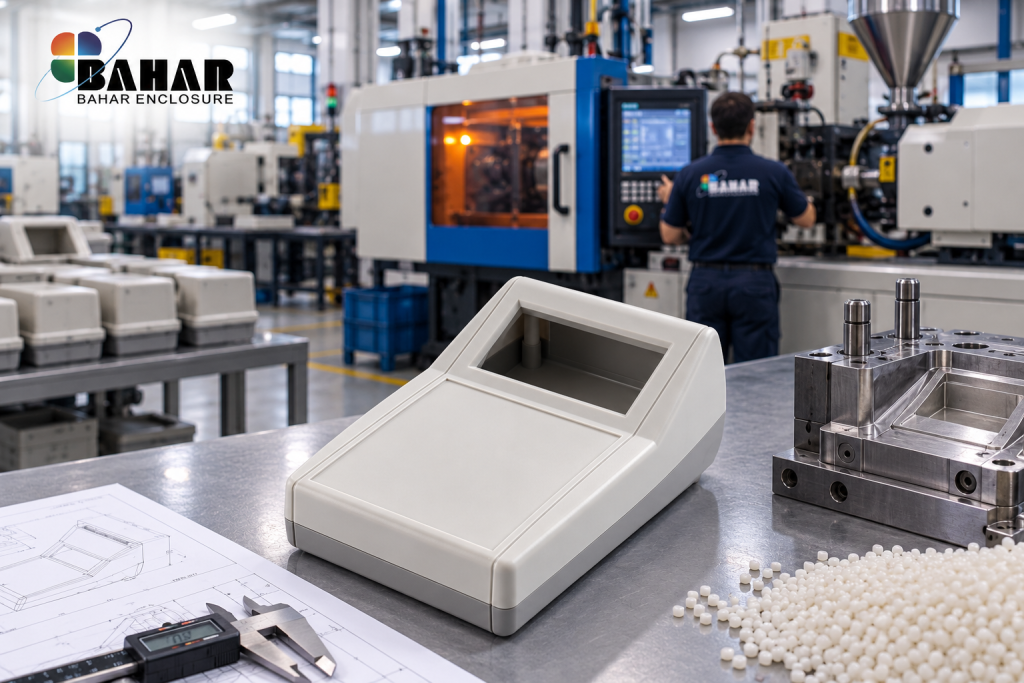
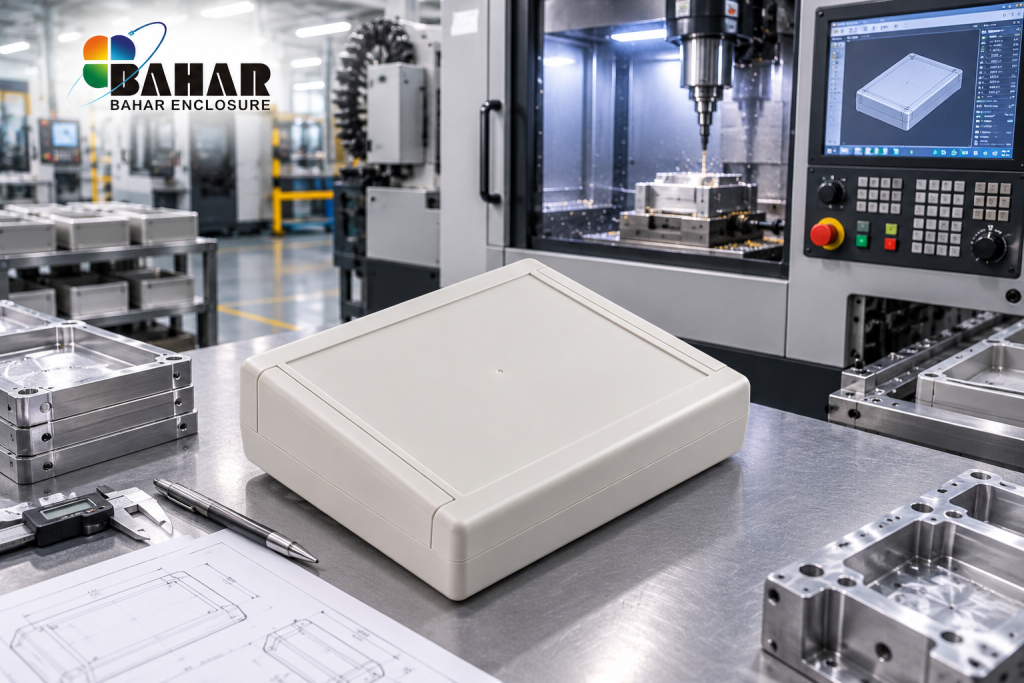
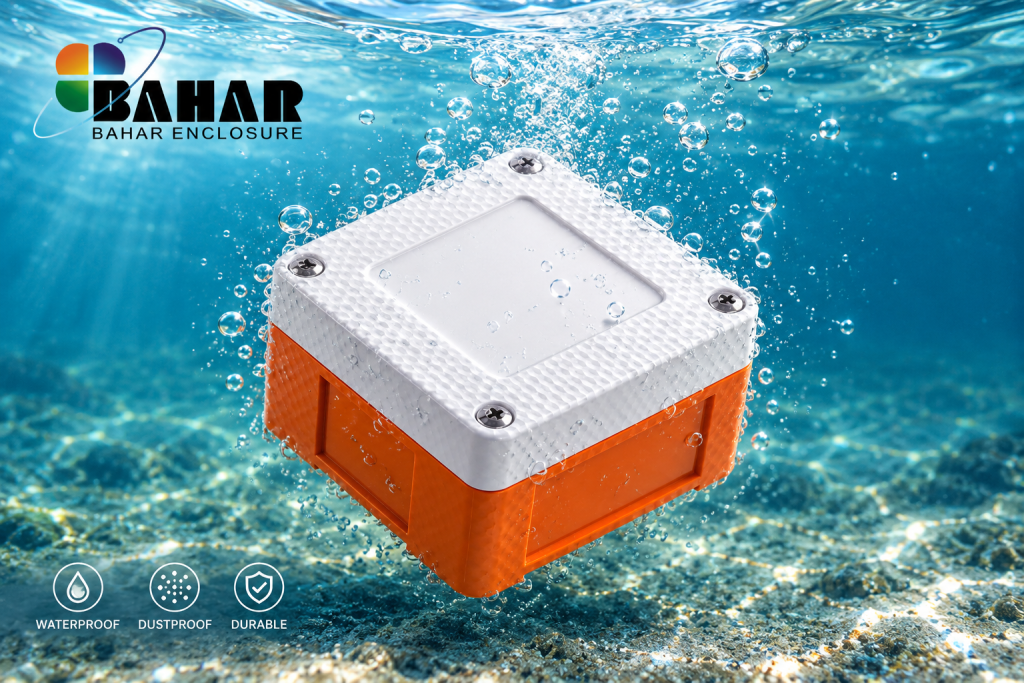


What Are Electronic Enclosures? Electronic enclosures are protective housings designed to contain and protect electronic components such as printed circuit boards (PCBs), sensors, controllers, power supplies, displays, switches, connectors, communication modules, and other sensitive electronic equipment.
They are used almost everywhere electronics need physical protection—from small handheld measuring devices and desktop instruments to industrial control systems and outdoor monitoring equipment.
The primary purpose of an electronic enclosure is to create a safe and suitable environment for the electronics inside. Depending on the application, an enclosure can help protect components against dust, water, accidental contact, mechanical damage, and other environmental conditions.
However, choosing an electronic enclosure is not simply a matter of finding a box large enough for a PCB.
Engineers and product designers should also consider enclosure material, internal dimensions, mounting method, component height, cable entry, environmental conditions, IP rating, heat generation, and customization requirements.
In this guide, we explain what electronic enclosures are, the most common enclosure types and materials, how IP ratings work, and what engineers should consider when selecting an enclosure for an electronic project.
An electronic enclosure is a protective housing used to contain electronic or electrical components and separate them from the surrounding environment.
Depending on the product, an enclosure may contain:
The enclosure forms the physical structure around these components and often provides the mounting points required to assemble them into a complete electronic device.
For a simple indoor electronic product, the enclosure may primarily protect the PCB and prevent accidental contact.
For industrial or outdoor applications, considerably more protection may be required. Electronics may need protection against dust, rain, water, dirt, mechanical impact, or other environmental conditions.
For these applications, engineers may need a sealed housing such as an IP68 plastic waterproof enclosure rather than a conventional indoor electronics box.
Electronic components can be sensitive to their operating environment.
Moisture, conductive dust, dirt, accidental impact, and improper handling can affect electronic equipment and may eventually cause failure.
A properly selected electronic enclosure can perform several functions at the same time.
The enclosure creates a physical barrier between sensitive electronics and their surroundings.
Depending on its construction and protection rating, it can help protect internal components from:
The required level of protection depends heavily on where the device will operate.
A controller installed inside an office requires a very different enclosure from an electronic monitoring system mounted outdoors.
Electronic enclosures can also provide mounting points for PCBs and other components.
Depending on the enclosure design, internal features may accommodate:
This is why engineers should evaluate the internal structure of an enclosure rather than considering external dimensions alone.
For commercial electronics, the enclosure is also the part of the product that customers see and touch.
Its shape, dimensions, surface finish, color, printing, control layout, and machining quality can significantly influence the appearance of the finished device.
There is no single enclosure design suitable for every electronic product.
Different applications require different materials, mounting methods, shapes, and levels of environmental protection.
Some of the most common electronic enclosure types include plastic, waterproof, desktop, handheld, wall-mounted, aluminum, and other metal enclosures.
Plastic electronic enclosures are widely used because they can provide a useful combination of low weight, electrical insulation, design flexibility, and economical production.
Common enclosure plastics include ABS and polycarbonate (PC).
Plastic enclosures are frequently used for:
They can also be modified with openings for displays, connectors, switches, push buttons, LEDs, cable entries, and other components.
Bahar offers several plastic enclosure configurations within its electronic enclosure product categories, including desktop, handheld, wall-mounted, and waterproof solutions.
ABS is one of the most common materials used for electronic housings.
It offers a useful combination of:
ABS enclosures are commonly used for controllers, instruments, desktop electronics, PCB projects, and many general industrial electronic devices.
For projects requiring environmental sealing, ABS is also used in various waterproof enclosure designs.
For example, Bahar’s BWP 100 Series waterproof enclosures include ABS enclosure solutions designed for electronic, electrical, outdoor, and industrial applications.
Polycarbonate, commonly abbreviated as PC, is another important material used for electronic enclosures.
It is frequently selected where higher mechanical performance or specific environmental requirements are important.
Polycarbonate is also useful for transparent enclosure lids.
A transparent lid can allow operators to see:
without opening the enclosure.
Some Bahar waterproof electronic enclosures are available with transparent lid configurations, making them useful for applications where equipment visibility is required while maintaining enclosure protection.
When electronics are installed outdoors or in wet, dusty, or industrial environments, a conventional enclosure may not provide sufficient protection.
A waterproof electronic enclosure is designed to limit the ingress of water and contaminants according to its construction and specified protection level.
Typical applications include:
Bahar’s IP68 Plastic Waterproof Enclosures cover multiple waterproof enclosure series for industrial and outdoor electronic applications.
Individual models can provide different sizes, lid configurations, mounting options, and protection characteristics, so engineers should always verify the specification of the exact model selected.
One of the most important specifications when selecting an enclosure for dusty or wet environments is its IP rating.
IP means Ingress Protection.
The IP Code is defined by IEC 60529, the international standard covering degrees of protection provided by enclosures for electrical equipment.
For the technical definition and requirements, engineers can refer directly to the IEC 60529 standard from the International Electrotechnical Commission.
An IP rating normally contains two characteristic numerals.
For example:
IP68
The first numeral relates to protection against access to hazardous parts and the ingress of solid foreign objects.
The second numeral relates to protection against the ingress of water.
Understanding this distinction is important because terms such as “waterproof” alone do not precisely describe an enclosure’s tested protection level.
An IP65 enclosure provides dust-tight protection and protection against water jets under the conditions specified by the applicable standard.
IP65 housings are therefore commonly considered for outdoor and industrial equipment where dust and water exposure may occur.
IP66 also provides dust-tight protection but includes protection against powerful water jets under the specified test conditions.
It can therefore be appropriate for equipment operating in more demanding environments.
IP67 includes dust-tight protection together with protection against temporary immersion in water under defined conditions.
However, IP67 should not automatically be interpreted as meaning that a product can remain underwater indefinitely.
The exact protection requirements and test conditions should always be considered.
IP68 represents a high level of ingress protection and is commonly specified for equipment requiring dust-tight construction and protection against continuous immersion under conditions defined according to the applicable standard and manufacturer specifications.
For this reason, engineers should verify the documentation and specifications for the particular enclosure rather than assuming that all products marketed as waterproof provide identical protection.
For projects requiring this level of environmental protection, you can explore Bahar’s IP68 waterproof enclosure range.
For example, the BWP 10002 IP68 waterproof junction box is an ABS enclosure with a transparent PC lid option intended for junction box, control box, and electrical box applications.
A desktop electronic enclosure is designed for equipment that operates on a desk, laboratory bench, workbench, counter, or other horizontal surface.
Typical applications include:
Desktop housings often prioritize accessibility, appearance, ventilation, and convenient positioning of controls and displays.
Bahar provides multiple desktop electronic enclosure designs for professional and industrial electronics.
For example, BMD Series housings include compact rectangular configurations suitable for PCB-based desktop and light industrial electronic products.
Other designs, such as the BDC Series, provide sloped upper surfaces that can be useful when the product requires displays, keypads, switches, or operator controls.
Handheld electronic enclosures are designed for portable equipment that users hold during operation.
Common applications include:
Because users physically hold these devices, ergonomics becomes particularly important.
The location of displays, buttons, batteries, connectors, and PCBs should be considered together with the overall shape of the enclosure.
Bahar’s hand-held electronic enclosure range includes the BMC 700 Series, developed for portable control, measurement, and testing devices.
These enclosures are available in multiple sizes and configurations and can support customization such as CNC machining, cutouts, printing, and laser engraving.
Some electronic equipment needs to be permanently installed on a wall, machine, structural frame, or industrial installation.
For these applications, a wall-mount electronic enclosure can provide a more practical solution than a desktop or handheld housing.
Typical applications include:
When selecting a wall-mounted enclosure, designers should consider not only PCB dimensions but also cable routing, cable glands, terminal blocks, maintenance access, and installation hardware.
Bahar provides wall-mounting solutions within its electronic enclosure range.
Plastic is not always the best material for an electronic product.
For some applications, an aluminum electronic enclosure may provide advantages such as:
Aluminum housings are commonly considered for instrumentation, industrial electronics, control equipment, communication systems, and other professional electronic products.
Bahar’s product range includes aluminum enclosures alongside its plastic enclosure solutions, allowing engineers to select a housing according to the mechanical, thermal, environmental, and appearance requirements of the project.
Metal electronic enclosures can be suitable for industrial equipment requiring strong mechanical construction.
Typical applications include:
Depending on the application, designers may choose aluminum or sheet-metal construction.
Bahar’s enclosure portfolio includes both aluminum and iron enclosure categories, in addition to plastic housings.
Selecting the right enclosure should ideally begin early in the electronic product development process.
Waiting until the PCB and all components have already been finalized can create unnecessary limitations.
Here are some of the most important factors to evaluate.
Begin with the length and width of the PCB.
However, do not choose an enclosure whose internal dimensions are almost identical to the board.
Additional clearance may be required for:
Always check the usable internal dimensions, not just the external dimensions printed in a product title.
PCB length and width alone are not enough.
Tall electronic components such as transformers, capacitors, relays, connectors, heat sinks, and displays can determine the minimum required enclosure height.
Reviewing the enclosure’s technical drawing or 3D model before ordering can help identify fit problems before production begins.
Ask where the finished device will operate.
Will it be:
An indoor PCB project may only require a conventional plastic enclosure.
Outdoor monitoring equipment may instead require a sealed waterproof electronic enclosure with an appropriate verified IP rating.
Material selection should reflect the actual application.
ABS can be suitable for many general electronic products.
Polycarbonate may be selected for demanding applications or transparent lids.
Aluminum can provide mechanical rigidity, heat dissipation, and a professional metal construction.
Sheet metal may be useful for larger industrial equipment and control systems.
There is no single “best” electronic enclosure material for every project.
Do not automatically specify IP68 simply because it represents a high level of protection.
The enclosure should match the actual operating conditions.
Higher environmental protection requirements can affect:
The IEC 60529 IP Code provides the internationally recognized framework for classifying enclosure ingress protection.
Consider the final installation method.
Will the finished product be:
Bahar offers multiple electronic enclosure categories covering these different installation requirements.
Yes.
In many electronics projects, a standard enclosure provides the basic housing, but additional processing is required before the electronics can be installed.
Common customization requirements include:
Bahar provides electronic enclosure customization for suitable projects, allowing standard plastic and metal housings to be adapted to specific electronic designs.
For example, an engineer may select an existing enclosure and provide a drawing showing the exact position of an LCD, USB connector, power connector, push buttons, and cable glands.
The enclosure can then be processed according to the confirmed design.
This can be considerably more economical than developing an entirely new mold, particularly during prototype development and lower-volume production.
Choosing an enclosure from photographs alone is risky.
A photograph cannot accurately show:
For this reason, engineers should review available drawings before finalizing their enclosure selection.
Bahar provides a Downloads section for technical resources, while product pages can also provide model-specific technical information.
STEP or other 3D files can be particularly useful when an enclosure needs to accommodate a PCB, display, connector, or other component with tight dimensional requirements.
One of the most important decisions in a new electronics project is whether to develop a completely custom enclosure or modify an existing standard housing.
A standard enclosure can significantly reduce:
For many projects, selecting an existing housing and adding CNC machining, cutouts, printing, or engraving provides an efficient path from prototype to production.
A completely custom molded enclosure becomes more attractive when production quantities justify tooling costs or when the product requires unique geometry that cannot be achieved using a standard enclosure.
This is why searching existing enclosure sizes before completing the PCB layout can sometimes save considerable development time.
Electronic enclosures are used across almost every industry involving electronic equipment.
Controllers, sensors, communication modules, relays, and operator interfaces often require protective housings.
Wireless sensors, gateways, monitoring devices, and data-collection equipment frequently use compact plastic or waterproof enclosures.
Desktop and handheld housings are widely used for electronic instruments, test equipment, and measurement devices.
Communication equipment may require wall-mounted, metal, or weather-resistant enclosures depending on the installation environment.
Access control, monitoring equipment, alarm systems, and related electronics require secure and reliable housings.
Agricultural monitoring and control systems may operate in environments containing humidity, dust, water, and changing temperatures, making enclosure selection particularly important.
Electronic controllers installed directly on or near machinery may require durable housings and appropriate environmental protection.
The terms electronic enclosure and electrical enclosure are sometimes used interchangeably, but they often describe different types of equipment.
Electronic enclosures frequently contain:
Electrical enclosures may more commonly contain:
There is, however, significant overlap.
Many modern industrial systems contain both electrical and electronic components.
A junction box is generally used to contain and protect electrical connections.
An electronic enclosure may contain much more complex equipment, including PCBs, processors, displays, controllers, sensors, power supplies, and communication modules.
Some waterproof housings can perform either role depending on the application.
For example, Bahar’s IP68 waterproof enclosure range includes models suitable for junction box, control box, and electronic equipment applications.
The correct choice should therefore be based on the internal equipment and operating environment rather than the product name alone.
Electronic enclosures are protective housings designed to contain electronic components such as PCBs, controllers, sensors, displays, power supplies, and communication equipment. They provide physical support and can help protect the electronics from environmental conditions and accidental contact.
Common materials include ABS plastic, polycarbonate, aluminum, and sheet metal. The correct material depends on environmental, mechanical, electrical, thermal, appearance, and cost requirements.
Outdoor electronics often require an enclosure with appropriate protection against dust and water. Depending on the environment, this may require an IP65, IP66, IP67, or IP68 waterproof enclosure. The required rating should be determined according to the actual installation conditions.
IP68 is an ingress-protection classification under IEC 60529. It indicates dust-tight protection together with protection against continuous immersion under specified conditions. Exact conditions should be verified for the particular product. More technical information is available from the International Electrotechnical Commission’s IEC 60529 standard.
Yes. Depending on the enclosure and project, customization can include CNC machining, display and connector openings, printing, laser engraving, ventilation openings, and other modifications. Bahar provides custom electronic enclosure services for suitable projects.
Yes, provided there is sufficient internal space and suitable mounting arrangements. PCB dimensions, component height, connectors, wiring, mounting positions, and required clearances should all be checked before ordering.
No. Waterproof and weather-resistant enclosures can have different protection ratings. Always verify the rating and technical specifications of the exact enclosure model.
Plastic housings can provide low weight, electrical insulation, and economical manufacturing. Aluminum can provide greater rigidity, heat dissipation, and metal construction. The correct choice depends on the requirements of the electronic device.
Electronic enclosures are a fundamental part of electronic product design.
The correct housing can protect sensitive components, simplify assembly, provide appropriate mounting, improve the appearance of the finished device, and help electronics operate reliably in their intended environment.
Before selecting an enclosure, consider:
Bahar Enclosure provides plastic and metal housing solutions for a wide range of electronic and industrial applications, including IP68 plastic waterproof enclosures, desktop electronic enclosures, hand-held enclosures, wall-mounting enclosures, aluminum housings, industrial control enclosures, and enclosure accessories.
For projects requiring openings, displays, connectors, printing, or other modifications, custom electronic enclosure services can help adapt an existing enclosure to the specific electronic design.
Engineers can also review available technical resources and enclosure drawings before selecting a model.
Choosing the enclosure early in the design process—and checking the technical drawing before finalizing the PCB—can reduce redesign, simplify production, and provide a faster route from prototype to finished electronic product.
What Are Electronic Enclosures and How Do They Work?
What are electronic enclosures, and why are they such an important part of modern electronic product design? Electronic enclosures are specially designed housings that contain, support, and protect electronic components while providing the physical structure required to turn individual components into a complete device.
Inside a typical electronic enclosure, you may find printed circuit boards (PCBs), microcontrollers, sensors, relays, displays, power supplies, communication modules, terminal blocks, batteries, switches, connectors, and wiring. The exact configuration depends on the application and the environment in which the equipment will operate.
Understanding what are electronic enclosures used for becomes especially important during the early stages of product development. Selecting the enclosure before finalizing PCB dimensions, connector positions, and display locations can help engineers avoid dimensional conflicts later in the project.
An enclosure also determines how users interact with the finished product. Openings may be required for LCD or HMI displays, push buttons, switches, USB ports, communication connectors, LEDs, antennas, cable glands, and power connections.
For this reason, an electronic enclosure should be considered part of the engineering design rather than simply a box added after the electronics have been completed.
Bahar provides a wide selection of electronic enclosure solutions for PCB projects, industrial electronics, controllers, monitoring equipment, IoT devices, instrumentation, and other electronic applications.
If you are researching what are electronic enclosures and how to select one, these 10 essential facts can help you make a better engineering decision.
An electronic enclosure does not simply hide electronic components.
A properly selected housing can provide physical protection, component mounting, cable organization, user access, environmental protection, and the external structure of the finished electronic device.
PCB mounting posts, internal ribs, removable panels, lid structures, screw locations, and other internal features can all affect how easily electronics can be assembled.
This is why two enclosures with similar external dimensions may provide very different usable internal spaces.
One of the most common mistakes when selecting an electronic enclosure is comparing only the external enclosure dimensions with PCB dimensions.
The internal usable space may be reduced by:
Engineers should therefore check the technical drawing before purchasing an enclosure.
Bahar provides technical drawings and downloadable resources that can help designers evaluate enclosure dimensions and component fit before proceeding with customization or production.
Another important part of understanding what are electronic enclosures is recognizing that the enclosure material can significantly influence the finished product.
Common materials include:
ABS plastic – widely used for general-purpose electronics because it is lightweight, electrically insulating, easy to process, and economical.
Polycarbonate (PC) – often selected for applications requiring different mechanical or environmental properties and can also be used for transparent lids.
Aluminum – suitable for many professional and industrial electronic products where rigidity, machining capability, appearance, or thermal characteristics are important.
Sheet metal – commonly used for industrial control systems, instrumentation, and larger electronic equipment.
Material should therefore be selected according to the actual application rather than appearance alone.
Not every electronic enclosure needs to be waterproof.
However, equipment installed outdoors or in dusty, wet, or industrial environments may require a specific ingress-protection level.
The internationally recognized IP classification system is defined by IEC 60529.
Ratings such as IP65, IP66, IP67, and IP68 represent different levels and conditions of protection against solid-object and water ingress.
For demanding environments, Bahar offers IP68 plastic waterproof enclosures in multiple sizes and configurations.
The protection rating of the specific enclosure model should always be verified before it is selected for a project.
Electronic enclosures are designed for different installation methods.
A portable measuring instrument, for example, should not normally use the same enclosure design as a permanently installed industrial controller.
Common enclosure configurations include:
For laboratory equipment, controllers, test instruments, and similar products, a desktop electronic enclosure may provide an appropriate configuration.
Portable equipment can instead use a hand-held electronic enclosure.
Selecting the installation method first can substantially reduce the number of enclosure options engineers need to evaluate.
A common misconception is that using a standard electronic enclosure means the finished product must look generic.
In reality, a standard housing can often be modified for a specific electronic design.
Depending on the enclosure and project requirements, customization can include:
Bahar provides custom electronic enclosure services for suitable plastic and metal enclosure projects.
This allows manufacturers to start with an existing enclosure and adapt it to their PCB, display, controls, connectors, and branding.
Creating a completely new plastic enclosure may require new tooling and mold development.
For prototype, low-volume, and many medium-volume electronic projects, this investment may not be necessary.
An alternative is to select an existing enclosure that already provides the required basic dimensions and then customize it.
For example, an existing housing could be modified with:
This approach can reduce development time and allow engineers to test the finished electronic system before investing in completely custom tooling.
When people ask what are electronic enclosures used for, the answer covers an enormous range of industries.
Applications include:
The same basic purpose remains: the enclosure creates a physical structure around the electronic system and helps protect and organize its components.
The required enclosure design, however, changes significantly between applications.
Enclosure selection should ideally begin before the PCB design is completely finalized.
Suppose an engineer finishes the PCB first and later discovers that the nearest standard enclosure is slightly too narrow.
The project may then require either:
Each option can add time and cost.
A more efficient approach is to evaluate available enclosure dimensions while designing the PCB.
Engineers can download the enclosure drawing or 3D model, position their electronic components inside the available space, and then finalize the PCB accordingly.
This becomes even more important when the product includes large components such as displays, transformers, relays, batteries, heat sinks, or multiple connectors.
There is no single enclosure that is best for every electronic project.
The correct selection depends on a combination of factors:
For example, an indoor desktop controller may be well suited to an ABS desktop housing, while an outdoor sensor system may require a sealed waterproof electronic enclosure.
An industrial instrument may instead benefit from an aluminum or other metal enclosure.
Therefore, when considering what are electronic enclosures and which type to choose, the correct answer always begins with the requirements of the electronic system itself.
Selecting an enclosure for a PCB should begin with accurate dimensional information.
Measure the PCB’s:
Then consider components that extend beyond the PCB, including connectors, switches, displays, antennas, batteries, and wiring.
Next, compare these requirements with the internal dimensions and mounting structure shown in the enclosure’s technical drawing.
Do not forget assembly clearance. A PCB may technically fit inside an enclosure while leaving insufficient room to connect cables or tighten mounting screws.
For projects requiring external controls or displays, identify the surfaces that need machining before selecting the final enclosure.
If customization is required, providing an accurate drawing or STEP file can make evaluation considerably easier.
The correct enclosure size should provide enough room for all components without being unnecessarily large.
Start with the PCB dimensions, then allow space for:
For example, a PCB measuring 100 × 60 mm does not automatically mean that an enclosure with approximately 100 × 60 mm internal space will be sufficient.
Connector projection, PCB mounting structures, and wiring may require additional clearance.
This is another reason why engineers should review technical drawings rather than selecting an enclosure based only on its advertised external dimensions.
The terms electronic enclosure, electronics enclosure, and electronics box are often used to describe similar products.
In professional engineering and industrial applications, “electronic enclosure” is commonly used to describe a housing designed to contain and protect electronic components.
“Electronics box” is a more general term and may refer to anything from a simple PCB project box to a complete industrial housing.
Regardless of terminology, the important factors remain material, dimensions, environmental protection, mounting structure, and suitability for the electronics inside.
When selecting an enclosure for a new product, engineers should ideally look for a supplier offering both a broad range of standard enclosure sizes and customization capabilities.
This makes it possible to find an enclosure close to the required dimensions and then modify it for the final electronic design.
Bahar Enclosure provides a broad selection of electronic enclosures including plastic waterproof, desktop, handheld, wall-mounted, industrial control, aluminum, iron, and accessory solutions.
Projects requiring additional processing can also use Bahar enclosure customization services for suitable CNC machining, cutting, printing, laser engraving, and related modifications.
This combination can help electronics manufacturers move from prototype development toward production without necessarily creating a completely new enclosure mold.
When discussing what are electronic enclosures, it is important to understand that an enclosure is not simply packaging for electronics. It is an engineering component that can influence reliability, assembly, maintenance, appearance, installation, and even the performance of the finished electronic system.
An enclosure interacts directly with almost every major part of an electronic product.
The PCB must fit inside it. Connectors must align with openings. Displays must remain visible. Buttons and switches must be accessible. Cables need sufficient space. Heat generated by electronic components must be considered, and the complete device must be suitable for its intended installation environment.
For these reasons, enclosure selection should ideally be considered at the beginning of a product-development project.
Engineers who select the enclosure early can design their PCB and component layout around known physical dimensions. This can reduce the risk of discovering dimensional problems after PCB production has already started.
A wide selection of electronic enclosures can also make it possible to use an existing housing rather than developing a completely new enclosure.
One of the easiest ways to understand what are electronic enclosures used for is to look at the components commonly installed inside them.
Electronic enclosures can contain many different components, including:
A simple enclosure might contain only a small PCB and battery.
A larger industrial enclosure could contain several PCBs, power supplies, terminal blocks, relays, communication modules, wiring, displays, and control components.
This diversity explains why electronic enclosures are available in so many dimensions and configurations.
Protection is one of the primary reasons electronic equipment requires an enclosure.
Electronic components are often designed to operate reliably within controlled conditions. Once they are installed in real-world environments, however, they can encounter contaminants and mechanical conditions that were not present during laboratory development.
An enclosure creates the first physical barrier between those components and their surroundings.
Dust may appear harmless, but accumulation inside electronic equipment can cause problems.
Depending on the environment, dust may interfere with:
Industrial environments may also contain particles very different from ordinary household dust.
For dusty environments, an appropriately rated enclosure may therefore be required.
The first characteristic numeral of the IP classification system relates to protection against access to hazardous parts and solid foreign objects.
Technical requirements for IP classifications are defined in IEC 60529.
Water exposure is another major consideration.
Electronic equipment can encounter water through:
The correct enclosure should be selected according to the actual type and level of exposure expected.
An indoor electronics project may not require significant water protection.
An outdoor controller or sensor system may require a waterproof electronic enclosure with an appropriate verified IP rating.
It is important to remember that different IP ratings represent different test conditions. Terms such as “water-resistant” and “waterproof” should therefore not replace verification of the technical rating required by the application.
An enclosure also separates users from the electronics inside.
This can help prevent accidental contact with:
The importance of this function increases when equipment contains higher voltages or is installed where users may regularly interact with the device.
Electronic devices may experience knocks, vibration, transportation, installation forces, or accidental impact.
The enclosure provides a physical structure around the internal components.
Material, wall thickness, geometry, internal reinforcement, mounting method, and assembly design can all influence mechanical performance.
Applications requiring greater rigidity may benefit from a metal enclosure, while many general electronic products can be effectively housed in ABS or polycarbonate designs.
ABS and polycarbonate are two common materials used for plastic electronic housings, but they are not identical.
Understanding their differences can help engineers choose a more appropriate enclosure.
ABS is commonly selected for general-purpose electronics.
Potential advantages include:
ABS can be suitable for:
It is also used in certain waterproof enclosure designs.
Bahar provides ABS solutions across several electronic enclosure categories.
Polycarbonate can provide different mechanical characteristics and is widely used in industrial enclosure applications.
One particularly useful characteristic is the possibility of producing transparent components.
Transparent PC lids can allow users to view indicators or displays while the enclosure remains closed.
This can be valuable for:
Bahar’s waterproof enclosure range includes configurations using transparent lids for suitable models.
Another common question when researching what are electronic enclosures is whether plastic or metal is the better material.
The answer depends on the project.
Plastic housings can offer:
They are widely used for consumer, commercial, laboratory, IoT, and industrial electronics.
Metal housings may offer:
Aluminum is particularly popular for electronic equipment because it combines metal construction with relatively low weight and good machinability.
Bahar offers both plastic and metal electronic enclosure solutions, allowing the enclosure material to be selected according to the project’s requirements.
Outdoor electronics present additional design challenges.
An outdoor device may experience:
The enclosure therefore becomes a critical part of the outdoor electronic system.
For these applications, engineers often investigate waterproof electronic enclosures with IP ratings appropriate for the installation.
However, the enclosure itself is only one part of the protection system.
Every modification made to a sealed enclosure should also be considered.
For example, drilling a hole for a cable without using an appropriate sealing solution can affect the protection of the final assembled device.
The same consideration applies to:
The finished equipment should therefore be evaluated as a complete system.
Industrial electronics can operate in environments significantly more demanding than offices or homes.
Factories and machinery installations may expose equipment to:
Industrial electronic enclosures may contain:
Depending on the installation, engineers may choose plastic waterproof, wall-mounted, aluminum, or sheet-metal housings.
Bahar’s electronic enclosure product range includes multiple enclosure styles intended for different electronic and industrial projects.
The rapid growth of IoT systems has created another major application for electronic enclosures.
An IoT device may combine:
Indoor IoT devices may use relatively simple plastic housings.
Outdoor IoT systems can require significantly greater environmental protection.
For example, remote monitoring equipment installed in agriculture, infrastructure, factories, or outdoor facilities may require a sealed enclosure.
A suitable IP68 waterproof enclosure can be considered when the application requires the corresponding level of protection.
Antenna placement should also be considered carefully, particularly when using metal enclosures, because enclosure material can influence wireless system design.
Many modern electronic products include a display or human-machine interface.
Examples include:
These components introduce additional enclosure-design requirements.
The front surface must provide sufficient usable area for the display opening.
Engineers should consider:
An enclosure that appears large enough externally may not provide sufficient flat machining area for the required display.
For this reason, reviewing the technical drawing before selecting the enclosure is particularly important for HMI projects.
Bahar can provide enclosure customization for suitable projects requiring display openings, CNC processing, printing, or other modifications.
Sensors are another common application.
Electronic sensor systems can monitor:
The enclosure requirements depend on what the sensor needs to measure.
Some sensors need direct exposure to the surrounding environment, while their electronic control circuitry requires protection.
This may require specialized openings, vents, membranes, probes, or external sensor connections.
The enclosure should therefore be selected as part of the complete sensor-system design.
Electronic controllers are found in industrial equipment, buildings, agriculture, automation, energy systems, and many other applications.
A controller enclosure may need space for:
For fixed installations, a wall-mounted or waterproof housing may be suitable.
For operator-controlled equipment, a desktop or sloped enclosure may provide easier access to displays and buttons.
The final choice depends on how the user interacts with the controller.
Heat is sometimes overlooked during enclosure selection.
Electronic components generate heat during operation.
Potential heat sources include:
If heat cannot escape effectively, internal temperatures may rise.
This can affect component performance and reliability.
Possible thermal-management approaches include:
However, ventilation can conflict with waterproofing.
Creating open ventilation holes in a sealed enclosure may compromise ingress protection.
Engineers designing waterproof electronic equipment should therefore evaluate thermal and environmental requirements together.
Most electronic equipment needs at least one external connection.
Cables may provide:
Cable entry should be considered before machining the enclosure.
Questions include:
For waterproof equipment, cable entry becomes especially important because the finished system’s sealing performance depends on more than the enclosure body and lid.
A PCB should be securely supported inside its enclosure.
Depending on the enclosure design, mounting may use:
PCB mounting affects both mechanical stability and assembly efficiency.
Before ordering an enclosure, engineers should compare the PCB mounting-hole pattern with the internal enclosure structure.
If the existing mounting points do not match the PCB, redesigning the board may sometimes be easier than extensively modifying the enclosure.
This is another reason to coordinate enclosure selection with PCB design.
Prototype customization and production customization should be considered differently.
During prototype development, engineers may need only a few enclosures to verify:
After the design is confirmed, larger quantities can be processed consistently according to the approved drawing.
Bahar’s customization services can support suitable projects requiring CNC machining, cutting, printing, laser engraving, and related enclosure processing.
Providing accurate technical files helps reduce uncertainty during quotation and production.
The required files depend on the type of customization.
Useful project information can include:
For machining, dimensional drawings should clearly identify the required cutouts and their positions.
For complex designs, a 3D model can make it easier to evaluate component fit.
Engineers can begin by reviewing Bahar’s technical resources and downloads and then prepare their customization requirements around the selected enclosure.
Enclosure development costs can be reduced through careful planning.
One of the most effective strategies is checking existing enclosure sizes before designing a new housing from scratch.
A standard enclosure may already provide:
Customization can then focus only on application-specific features.
For example:
Standard enclosure + CNC openings + printing
may be substantially simpler than:
New industrial design + new mold + mold testing + revisions + production.
This approach can be particularly useful during early-stage product development.
When comparing enclosure dimensions, distinguish between:
External dimensions – overall outside dimensions of the housing.
Internal dimensions – available space inside the enclosure.
Usable internal dimensions – actual space available after considering posts, ribs, screws, panels, and other structures.
Panel dimensions – dimensions of removable or machinable panels.
Machining area – the area where openings can practically be created.
This distinction becomes especially important when the enclosure needs a large display or PCB.
Never assume that a 150 mm-wide enclosure provides 150 mm of usable internal width.
Always check the drawing.
Ideally, enclosure and PCB design should develop together.
If an existing enclosure can meet the product requirements, choosing it early allows PCB dimensions and mounting holes to be designed around the available internal structure.
This can:
For projects where the enclosure appearance and dimensions are critical, the industrial design may determine the PCB shape instead.
There is no universal sequence, but enclosure selection should not be left until the final stage.
During prototyping, an enclosure allows engineers to test more than the electronic circuit.
It makes it possible to evaluate the complete product.
This includes:
A prototype enclosure can reveal mechanical problems that would never appear during PCB testing alone.
For this reason, using an existing customizable enclosure can accelerate development.
A standard enclosure begins as a general-purpose housing.
Customization transforms it into a product-specific component.
Imagine a controller requiring:
The basic enclosure may already provide the correct overall dimensions and internal space.
CNC machining can create the display and connector openings.
Additional holes can accommodate the buttons and cable glands.
Printing or laser engraving can add branding and operating labels.
The result is a housing designed around the customer’s electronics without requiring a completely new enclosure mold.
For suitable projects, Bahar provides these types of electronic enclosure customization services.
Before selecting an electronic enclosure, check the following:
Completing this checklist before ordering can prevent many common enclosure-selection problems.
Electronic enclosures are used to contain, support, organize, and protect electronic components. They can house PCBs, controllers, sensors, power supplies, displays, communication modules, connectors, batteries, and other electronic equipment.
Outdoor electronic enclosures are housings designed for electronics operating outside controlled indoor environments. Depending on the application, they may require protection against dust and water. Bahar provides waterproof electronic enclosures for various outdoor and industrial applications.
Electronic enclosures are commonly manufactured from ABS, polycarbonate, aluminum, and sheet metal. Material selection depends on mechanical, environmental, thermal, electrical, appearance, and cost requirements.
Some are, but not all electronic enclosures are waterproof. Protection depends on enclosure design and its verified IP rating. Engineers should check the specification of the exact model.
An IP68 electronic enclosure is classified according to the IP system defined by IEC 60529 and provides dust-tight protection together with protection against continuous immersion under specified conditions. The exact conditions applicable to a particular enclosure should be verified from its technical documentation.
Many plastic and metal enclosures can be CNC machined, depending on their geometry and material. Machining can create openings for displays, connectors, buttons, switches, cable glands, and other components.
Yes, depending on the material, surface, quantity, and project requirements. Printing or laser engraving can often be used to add logos, labels, operating instructions, or product identification.
Yes. Standard electronic enclosures are particularly useful during prototype development because they can reduce or eliminate the need for new tooling. The housing can be customized to accommodate the prototype electronics.
Some enclosure designs can be suitable for junction-box applications, provided their dimensions, material, protection rating, and other technical characteristics meet the installation requirements.
Start with PCB dimensions and component height, then evaluate internal usable space, installation environment, required IP rating, material, mounting method, cable entry, thermal requirements, and customization needs.
So, what are electronic enclosures?
Electronic enclosures are engineered housings used to contain, support, organize, and protect electronic components while providing the physical structure required for a complete electronic product.
They can range from compact plastic boxes for simple PCB projects to waterproof IP-rated housings for outdoor equipment, handheld cases for portable instruments, desktop housings for laboratory electronics, wall-mounted boxes for industrial controllers, and aluminum or sheet-metal enclosures for professional equipment.
Choosing the correct electronic enclosure requires careful consideration of the entire electronic system—not just its PCB dimensions.
Material, internal usable space, component height, environmental conditions, IP rating, mounting method, cable entry, heat generation, display requirements, and customization should all be evaluated.
For many projects, using an existing enclosure and customizing it can provide a faster and more economical route than developing a completely new housing.
You can explore Bahar Enclosure’s electronic enclosure range to compare plastic, waterproof, desktop, handheld, wall-mounted, aluminum, iron, and industrial enclosure options.
For outdoor and demanding environments, explore IP68 plastic waterproof enclosures.
For equipment used on desks and workbenches, browse desktop electronic enclosures.
For portable equipment, see hand-held electronic enclosures.
And if a standard housing needs display openings, connector cutouts, CNC machining, printing, or engraving, review Bahar’s custom electronic enclosure services.
Selecting the right enclosure early can simplify PCB design, reduce development costs, improve assembly, and provide a clearer path from the first prototype to production.
Desktop Enclosures: Complete Guide for Electronic Equipment