Professional Enclosure Manufacturer | Custom Solutions
Home > Desktop Enclosure > BDC 30004 – Ventilated Control Enclosure

Perfect for control electronics, communication modules, monitoring devices and equipment requiring improved airflow.
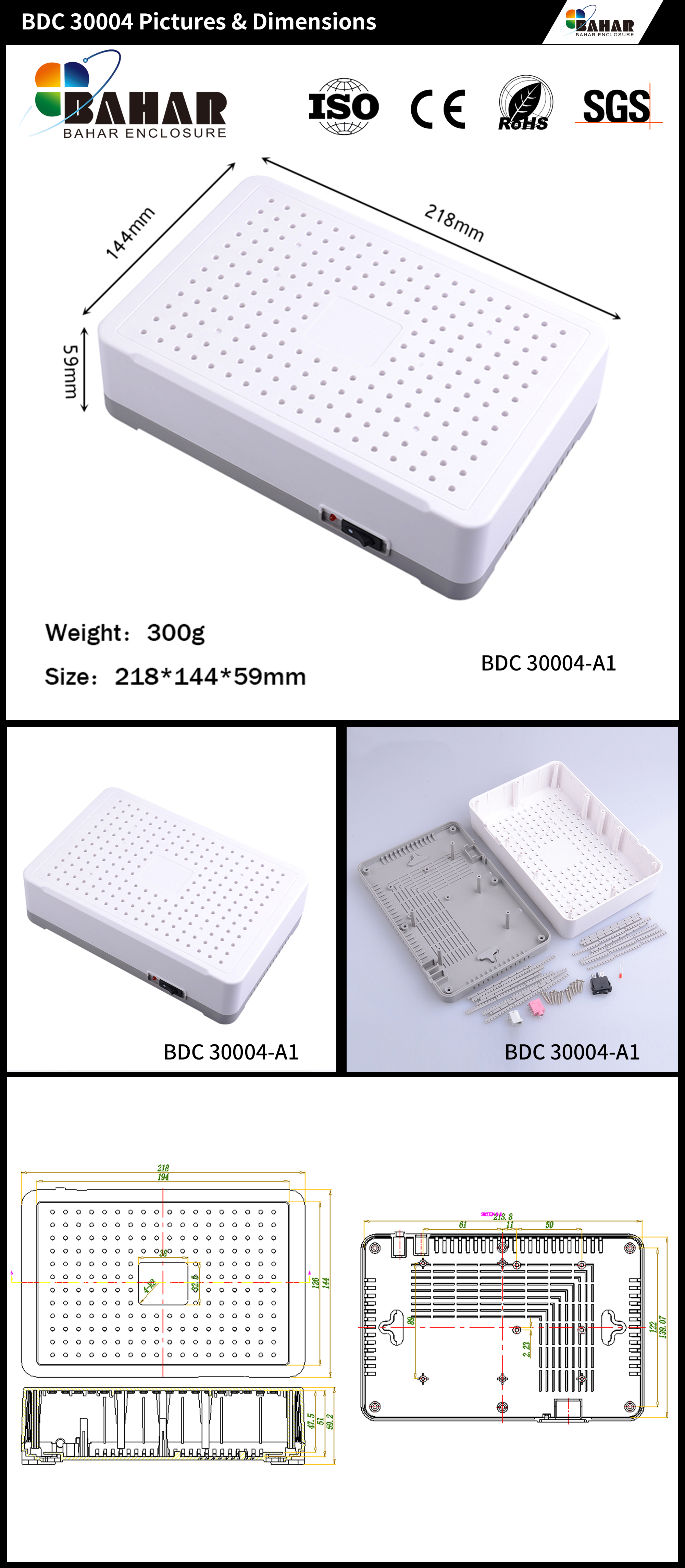
BDC 30004|218 × 144 × 59 mm

Durable enclosure designed for industrial and electronic desktop applications.
|
🧱 Material
ABS Plastic
|
🌡️ Temperature
-30°C to +85°C
|
|
💧 Protection
IP54 Rated
|
🎨 Color
Off-white
|
| Model | BDC 30004 |
| Application | Junction boxes, control boxes, electrical boxes |
| Size | 218 × 144 × 59 mm |
| Weight | 300 g |
| Material | ABS |
| Color | Off-white |
| Protection | IP54 |
| Certificates | ABS, SGS |
Electronic equipment continues to become more powerful, compact and feature-rich. While these advancements improve functionality, they also increase heat generation inside electronic devices. Effective thermal management has therefore become one of the most important considerations during product development. The BDC 30004 Ventilated Control Enclosure has been designed to support these requirements by combining a practical desktop enclosure structure with integrated ventilation features.
Unlike traditional sealed housings that focus exclusively on environmental protection, a Ventilated Control Enclosure prioritizes airflow and thermal performance. This makes it particularly suitable for devices that contain processors, communication modules, power supplies and electronic circuits that generate continuous heat during operation.
Many industrial products require an enclosure capable of maintaining reliable operation while allowing heat to dissipate naturally. Excessive temperatures can shorten component lifespan, reduce system stability and negatively impact long-term performance. Selecting an appropriate enclosure therefore plays a critical role in overall product reliability.
Manufacturers frequently evaluate solutions from the Desktop Enclosure Collection when developing equipment that requires convenient operator access together with effective heat management.
The BDC 30004 Ventilated Control Enclosure provides a balanced solution by combining a professional appearance, practical dimensions and airflow-friendly construction suitable for a wide variety of industrial and commercial applications.
Heat is one of the most common factors affecting electronic reliability. As electronic assemblies become increasingly complex, thermal management becomes a critical engineering consideration throughout the design process.
A Ventilated Control Enclosure helps improve airflow around internal electronic assemblies, reducing the accumulation of heat and supporting more stable operating conditions. This can be particularly important for equipment expected to operate continuously throughout the day.
Modern electronics often integrate multiple heat-generating components including processors, communication modules, voltage regulators and display systems. These devices can generate significant thermal loads that must be managed effectively.
By incorporating ventilation openings into the enclosure design, engineers can support passive cooling strategies that reduce the need for additional cooling hardware. This approach can simplify product design while lowering production costs.
Many monitoring devices, communication gateways and automation controllers benefit significantly from enclosure solutions that encourage natural airflow without compromising usability.
Communication devices frequently operate continuously while processing large volumes of information. These systems may include network interfaces, wireless communication modules and embedded processors that generate heat during operation.
A Ventilated Control Enclosure provides an effective housing solution for communication equipment because it supports airflow while maintaining a professional desktop appearance.
Organizations deploying communication infrastructure often utilize products from the DIN Rail Enclosure Series for distributed field equipment while employing desktop enclosures for centralized communication devices and monitoring stations.
This combination creates a practical architecture that supports both field installation and operator interaction. Communication systems continue to increase in complexity, making thermal management an increasingly important consideration during product development.
The use of a Ventilated Control Enclosure helps manufacturers create communication products capable of maintaining stable performance throughout extended operating periods.
Industrial automation systems often operate around the clock, processing information, controlling equipment and coordinating manufacturing activities. Continuous operation creates thermal challenges that can affect electronic performance if not managed properly. The BDC 30004 Ventilated Control Enclosure helps address these requirements through a design optimized for airflow and reliable operation.
An effective Ventilated Control Enclosure can contribute to longer component life by reducing heat accumulation around critical electronics. Stable operating temperatures help improve reliability and support consistent performance during demanding applications.
Automation equipment frequently includes PLC interfaces, communication modules, monitoring electronics and operator displays. These components require sufficient space together with airflow pathways that encourage natural cooling.
Manufacturers developing automation equipment often combine desktop products with solutions from the Wall Mounting Enclosure Collection to create complete automation architectures for industrial facilities.
The flexibility of the Ventilated Control Enclosure makes it suitable for a wide range of automation applications including process monitoring, machine control, production supervision and communication management.
Modern network equipment frequently operates continuously while handling large amounts of data traffic. Routers, gateways, protocol converters and communication hubs all generate heat that must be dissipated effectively.
A Ventilated Control Enclosure provides an excellent housing platform for network hardware because airflow openings help improve passive cooling performance without requiring complex thermal management systems.
Network devices installed within industrial environments must remain reliable despite demanding operating conditions. Proper enclosure selection can therefore play a significant role in overall system stability.
Many communication products utilize ventilation features to support long-term operation and improve thermal efficiency. A well-designed Ventilated Control Enclosure helps manufacturers achieve these objectives while maintaining a professional product appearance.
Organizations expanding industrial networking capabilities often utilize solutions from the Desktop Enclosure Collection for operator-facing communication equipment.
Monitoring systems are essential tools for modern industries. They collect information from equipment, analyze performance and help operators identify developing issues before they become serious problems.
A Ventilated Control Enclosure supports monitoring equipment by providing space for displays, indicators, communication interfaces and processing electronics while maintaining airflow around internal components.
Diagnostic devices frequently process large amounts of information and may operate continuously throughout the day. Effective heat dissipation therefore contributes directly to equipment reliability and operational stability.
Many monitoring solutions communicate with remote devices installed in products from the Waterproof Enclosure Collection, creating integrated monitoring infrastructures capable of supporting industrial facilities and infrastructure projects.
As monitoring technology becomes increasingly sophisticated, enclosure platforms that support thermal management continue to grow in importance.
Embedded computing technologies are now used throughout industrial automation, transportation systems, communication networks and intelligent infrastructure projects. These devices often incorporate powerful processors that generate substantial heat during operation.
The Ventilated Control Enclosure provides a practical solution for embedded computing products because it supports airflow while maintaining accessibility for users and service personnel.
Many embedded systems integrate communication technologies, data processing capabilities and advanced software platforms within compact hardware configurations. These requirements place increased emphasis on enclosure design and thermal performance.
Manufacturers often seek enclosure platforms capable of supporting future hardware upgrades without requiring major redesign activities. The versatility of a Ventilated Control Enclosure makes it attractive for long-term product development strategies.
Additional product resources can be found through the Downloads Center and technical guidance is available through the Engineering Blog.
Power management equipment is responsible for regulating, distributing and monitoring electrical energy throughout industrial facilities and commercial installations. These systems frequently contain components that generate heat during operation, making airflow an important design consideration.
A Ventilated Control Enclosure helps support thermal management requirements by encouraging natural air circulation around electronic assemblies. This contributes to improved operational stability and long-term reliability.
Power monitoring devices, battery management systems and energy optimization controllers often require desktop-oriented enclosures that provide both accessibility and thermal performance.
The BDC 30004 Ventilated Control Enclosure offers a practical platform for these applications by combining a professional appearance with airflow-friendly construction.
Organizations seeking customized machining, display cutouts and branding options can utilize the Customization Service to adapt the enclosure for specific project requirements.
A Ventilated Control Enclosure is an electronic housing designed with airflow openings that help dissipate heat generated by internal electronic components.
Communication devices, monitoring systems, automation controllers, embedded computers, power management equipment and industrial electronic products.
Yes. Custom machining, display windows, connector cutouts, printing and branding services are available.
Ventilated enclosures improve airflow and help reduce heat buildup, which can contribute to improved reliability and longer component life.
You can submit inquiries through the Contact Page for technical assistance and project quotations.
Products developed using a Ventilated Control Enclosure often follow references from ISO Standards, IEC Standards, UL Certification, RoHS Compliance and CE Marking when preparing products for global markets.
Telecommunication equipment continues to evolve as organizations demand faster connectivity, higher bandwidth and more reliable communication networks. Routers, gateways, converters and communication controllers frequently operate continuously, generating heat that must be managed efficiently.
A Ventilated Control Enclosure provides an excellent housing platform for telecom hardware because ventilation openings support passive airflow while maintaining a professional product appearance. This combination is particularly valuable for communication devices that remain active twenty-four hours a day.
Modern communication infrastructure often includes Ethernet controllers, wireless gateways, protocol converters and monitoring systems. These devices contain processors and communication chipsets that generate heat during normal operation.
Selecting a Ventilated Control Enclosure helps engineers create products capable of maintaining stable temperatures without introducing excessive cooling complexity. This approach can reduce production costs while supporting long-term reliability.
Communication systems frequently interact with field equipment installed in products from the Waterproof Enclosure Collection while centralized management devices remain housed within desktop enclosures located in offices and technical control rooms.
Security technologies continue to expand across industrial facilities, transportation networks, commercial buildings and critical infrastructure projects. Video processing systems, monitoring terminals and communication controllers frequently require effective thermal management due to continuous operation.
A Ventilated Control Enclosure offers a practical housing solution for security-related electronics because it combines accessibility, professional appearance and airflow support within a single enclosure platform.
Many surveillance systems operate continuously and process significant amounts of information throughout the day. Heat generated by processors, storage devices and communication modules can influence performance if not managed appropriately.
The airflow-friendly design of a Ventilated Control Enclosure helps improve operating conditions for electronic assemblies while maintaining an organized mechanical structure.
Manufacturers developing security products often prioritize enclosure platforms that can support multiple product generations while reducing engineering effort and tooling expenses.
Building automation technologies manage lighting, HVAC systems, access control, environmental monitoring and energy management functions throughout modern facilities. These systems frequently depend on controllers and monitoring devices that operate continuously.
A Ventilated Control Enclosure supports building automation equipment by providing sufficient space for electronic assemblies while encouraging airflow around heat-generating components.
As intelligent buildings become increasingly sophisticated, controllers often integrate communication technologies, remote monitoring functions and advanced software capabilities. These features can increase thermal loads within electronic devices.
Engineers selecting a Ventilated Control Enclosure benefit from a housing platform that supports airflow while maintaining a clean and professional appearance suitable for commercial environments.
Many building automation systems combine desktop monitoring equipment with products from the Wall Mount Enclosure Series to create complete facility management infrastructures.
Developing industrial products requires balancing performance, reliability, manufacturability and cost. Enclosure selection influences all of these factors because the housing serves as the foundation of the final product.
A Ventilated Control Enclosure provides engineers with a versatile platform suitable for communication equipment, automation systems, monitoring devices and embedded computing products.
By utilizing a proven enclosure platform, manufacturers can focus resources on software development, electronic innovation and user experience improvements rather than repeatedly redesigning mechanical structures.
The availability of customization options further increases the value of the Ventilated Control Enclosure. Display windows, connector openings, ventilation modifications and branding elements can be incorporated according to project requirements.
This approach helps accelerate product development while maintaining a professional appearance across multiple product families.
Organizations looking for dependable enclosure solutions often review technical guidance from IEC, ISO, UL, RoHS and CE when developing products intended for global markets.
Edge computing technologies are transforming the way industrial organizations process information. Instead of sending all data to centralized servers, modern systems perform processing closer to the source. This approach improves response times, reduces network traffic and supports real-time decision making.
A Ventilated Control Enclosure provides an excellent platform for edge computing devices because processors, communication modules and storage systems often generate significant heat during operation. Proper airflow contributes to stable performance and long-term reliability.
Industrial edge devices are commonly used in manufacturing plants, utility infrastructure, transportation networks and smart building projects. These applications frequently require continuous operation, making thermal management a critical engineering consideration.
The BDC 30004 Ventilated Control Enclosure supports these requirements by offering a desktop-oriented housing solution suitable for modern computing hardware.
Many edge computing deployments combine centralized monitoring terminals with equipment housed in the DIN Rail Enclosure Collection, creating scalable and efficient industrial architectures.
Data loggers are widely used to record operational information, environmental conditions and equipment performance metrics. These devices frequently operate continuously over extended periods while processing information from multiple sensors and communication interfaces.
A Ventilated Control Enclosure helps create favorable operating conditions for data logging systems by improving airflow around electronic assemblies and reducing heat accumulation inside the housing.
Organizations rely on data logging equipment to improve maintenance planning, identify operational trends and support regulatory compliance requirements. Reliable hardware platforms are therefore essential.
The desktop-oriented structure of the Ventilated Control Enclosure provides convenient access to displays, indicators and communication ports while maintaining a professional appearance suitable for industrial and commercial environments.
As data-driven decision making becomes increasingly important, demand for reliable monitoring and logging equipment continues to grow across numerous industries.
Industrial gateways serve as communication bridges between equipment, software platforms and remote monitoring systems. These devices frequently handle multiple protocols while processing significant amounts of operational information.
The use of a Ventilated Control Enclosure helps improve thermal performance for gateway products that incorporate communication processors, networking hardware and embedded software platforms.
Gateway devices are commonly used in Industrial IoT applications where information must be collected from field equipment and transmitted to centralized systems for analysis and reporting.
Many Industrial IoT architectures combine gateway equipment with products from the Waterproof Enclosure Series to support communication between indoor monitoring systems and outdoor field devices.
The flexibility of the Ventilated Control Enclosure makes it suitable for both new product development and modernization projects involving existing industrial infrastructure.
Industrial electronics manufacturers face increasing pressure to deliver reliable products while maintaining competitive development schedules. Standardized enclosure platforms provide an effective strategy for reducing engineering complexity and accelerating product launches.
A Ventilated Control Enclosure allows manufacturers to focus on electronic innovation rather than repeatedly developing custom housing solutions for every project.
The enclosure can support a variety of products including communication systems, monitoring devices, automation controllers, embedded computers and industrial interface equipment.
Companies seeking additional flexibility can utilize the Customization Service to incorporate display openings, connector cutouts, logos and other project-specific features.
This approach improves development efficiency while helping manufacturers maintain consistent branding across multiple product families.
Several industry trends are increasing demand for thermal-friendly enclosure platforms. These include Industrial IoT adoption, edge computing growth, artificial intelligence integration and the expansion of intelligent manufacturing systems.
As processing capabilities continue to increase, electronic devices will generate greater thermal loads. Engineers must therefore consider airflow and cooling performance during the earliest stages of product development.
A Ventilated Control Enclosure provides a practical solution by supporting passive cooling strategies without introducing unnecessary complexity. This makes it an attractive option for many modern electronic products.
Manufacturers preparing products for international markets frequently reference standards and best practices from ISO, IEC, UL, RoHS and CE to support quality and compliance objectives.
As industrial technology evolves, the importance of reliable thermal management will continue to increase. The Ventilated Control Enclosure offers manufacturers a dependable foundation for developing the next generation of industrial electronic equipment.